Italian Chains in Sterling Silver: A Practical Guide
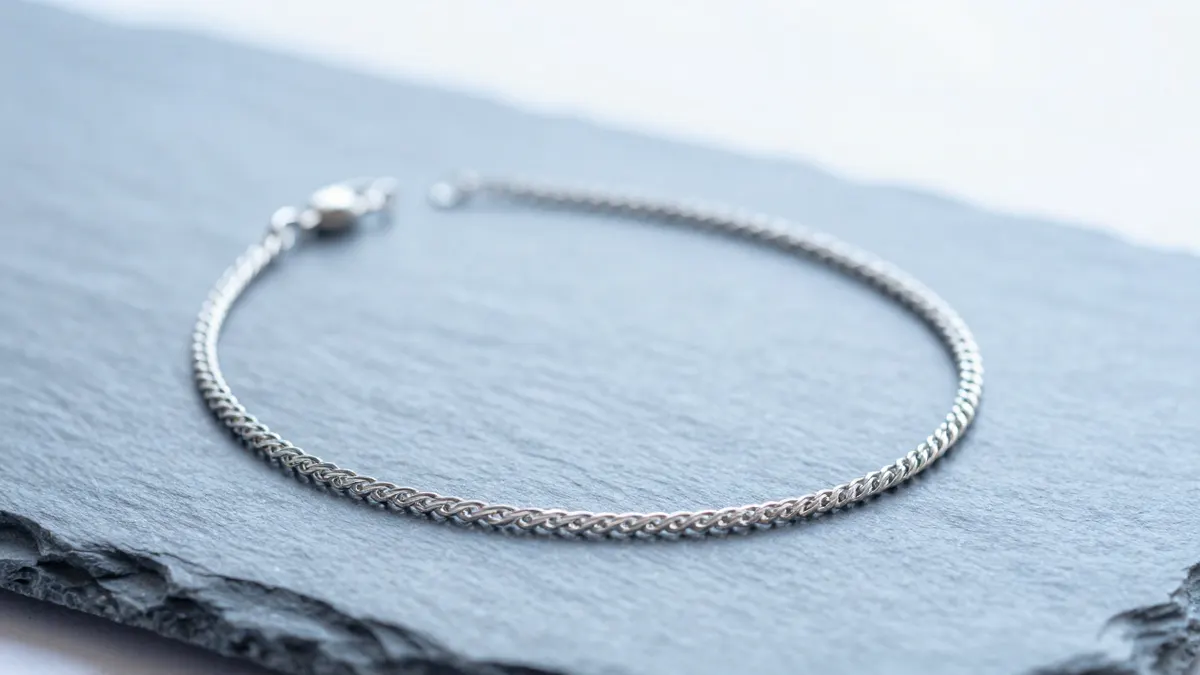
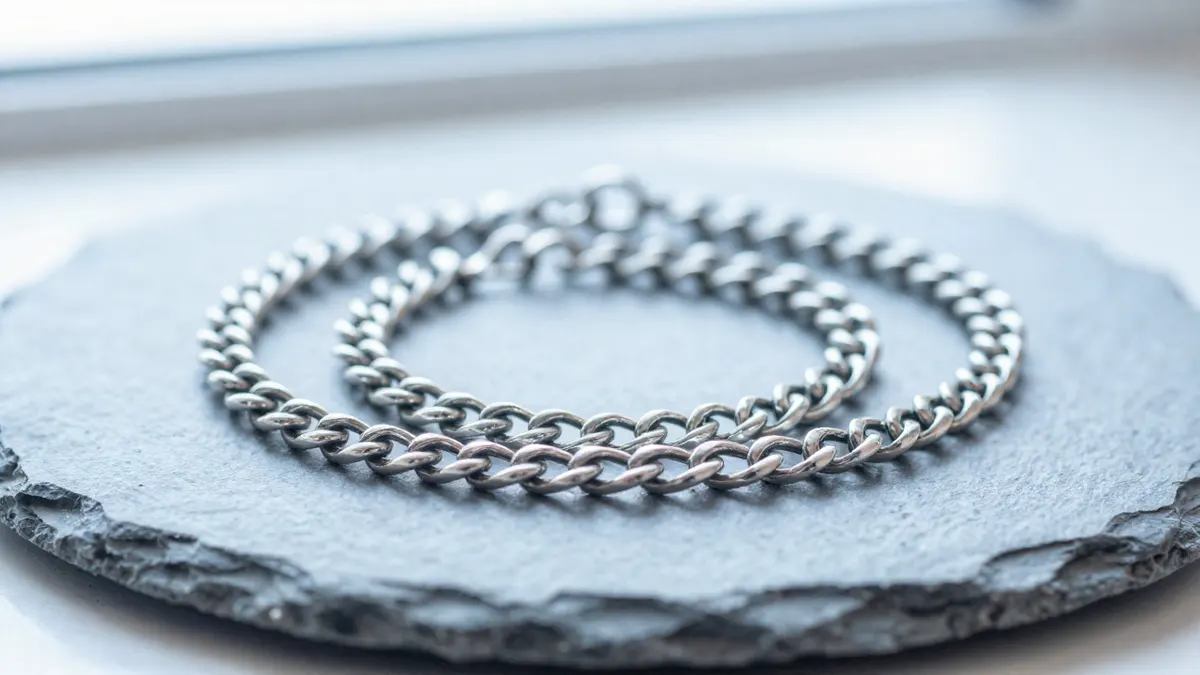
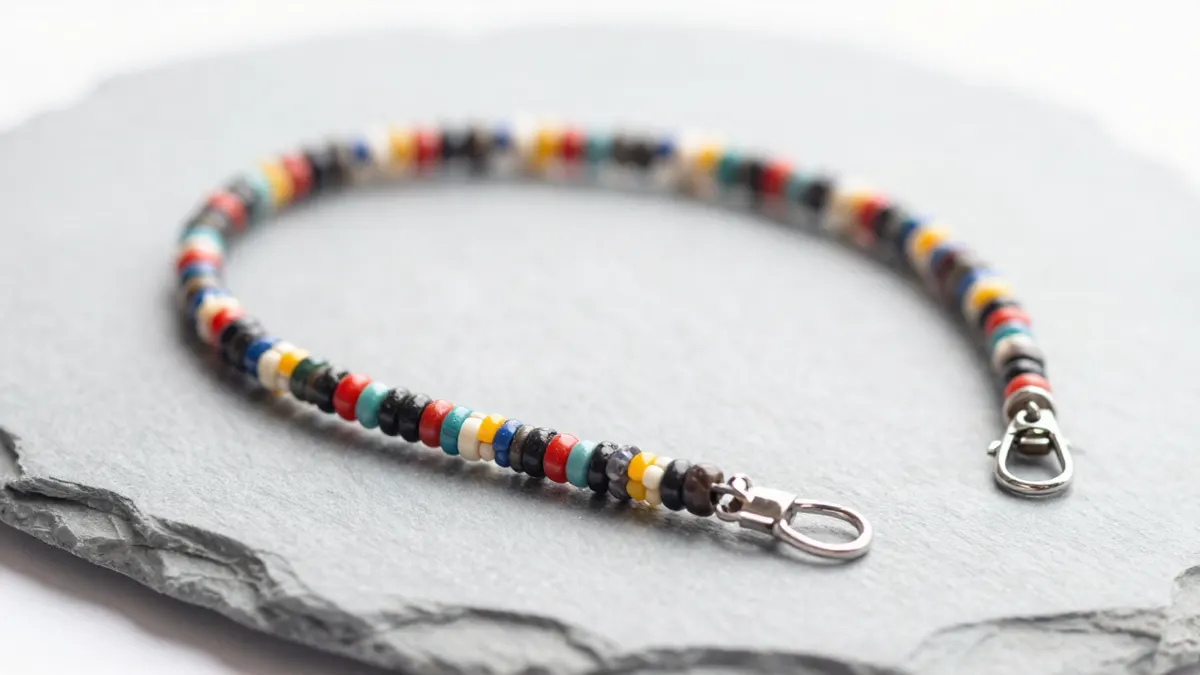
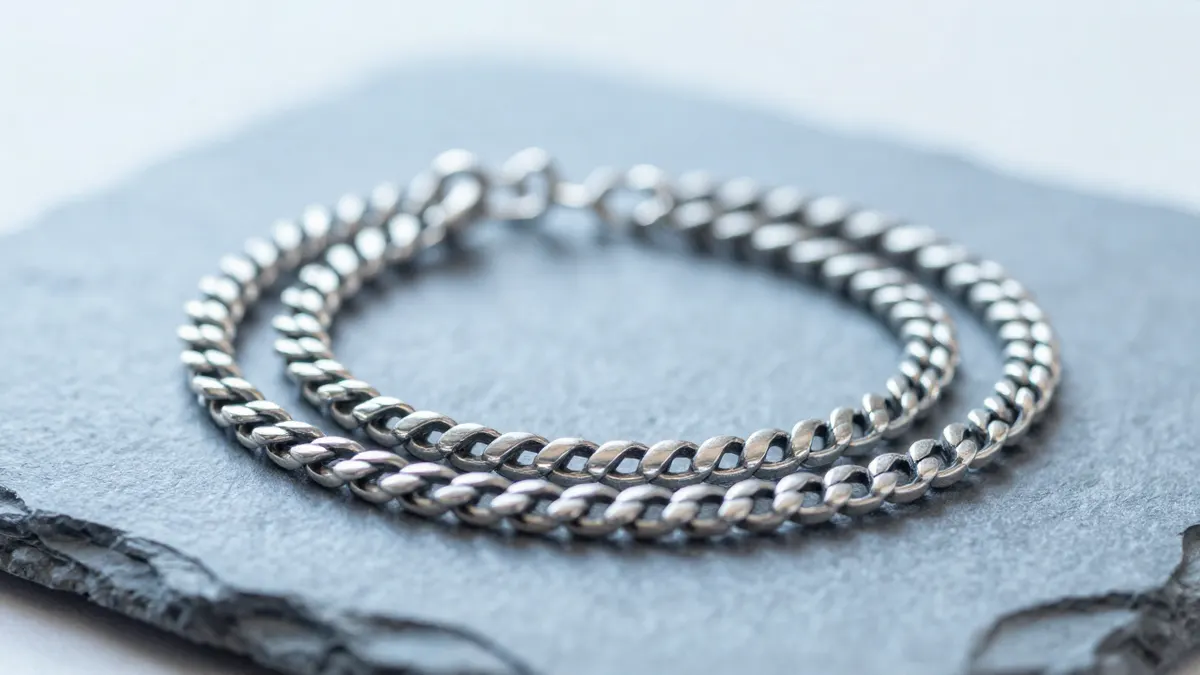
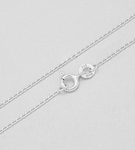
Italian chains are sterling silver chains made in the style and workshops of Italy, mostly around Arezzo and Vicenza. They are stamped 925, which means 92.5% pure silver. Most are machine-woven, hollow or solid, then finished with a rhodium or plain polish.
If you already own a delicate Italian chain, a silver clover anklet makes a light companion for it on warm summer days.
Prices vary a lot. A thin 1 mm cable chain can start at roughly $20, while a heavier solid link of 4 mm or more often runs from $80 to well over $200, depending on weight.
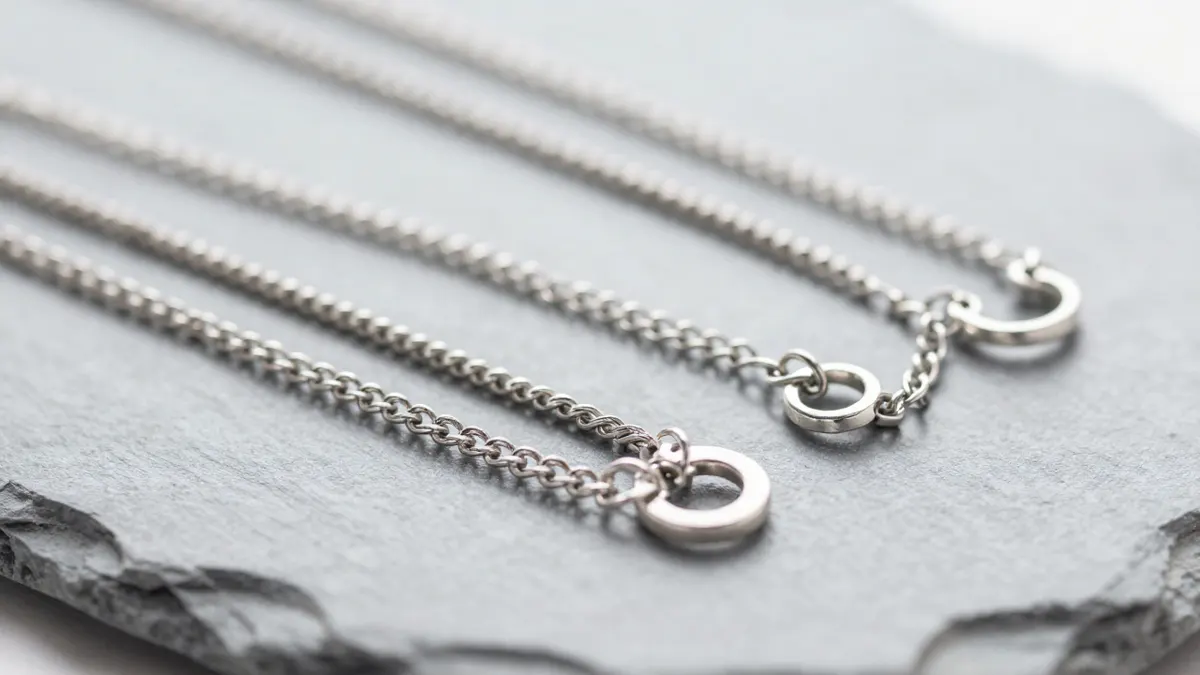
Main Types of Italian Chains
The pattern of the links decides how a chain looks, how it hangs and how easily it kinks. Here are the styles people search for most.
Cable
Plain oval links, all the same size. It is the safest choice if you wear a pendant every day. A sterling silver cable chain around 1.2 mm thick and 16 inches long holds most small charms without trouble.
Spiga
Also called wheat chain, it twists tiny links into a braided ear-of-grain pattern. A spiga chain catches the light from every angle and lies flat on the collarbone. It can be worn alone. Pendants with large bails tend to snag in the weave, so keep them slim.
Venetian
Square or box-shaped links that form a smooth, almost tubular line. A Venetian chain is hard to tangle and stands up well to daily wear, which is why it is common for small pendants and for men's necklaces.
Others you will meet
- Rope, with a twisted, diamond-cut look
- Curb, flat and slightly tilted links
- Snake, smooth and scaled, with no visible links
- Figaro, a repeating pattern of short and long links
Choosing Italian Chains by Length and Width
Length matters more than most buyers expect. A 16 inch chain sits at the base of the neck, 18 inches falls just below the collarbone, and 20 to 24 inches hangs over a sweater. For a first chain, 18 inches is the safest pick.
Width changes the mood. Anything under 1.5 mm reads as delicate and suits a pendant. Between 2 and 3 mm you get a chain that works alone. Past 4 mm it becomes a statement piece, and the weight is noticeable on the neck after a few hours.
Check the clasp too. A lobster clasp is more secure than a spring ring, especially on thin chains, and a small extender tag of 1 to 2 inches gives you flexibility on length.
Hollow or Solid Italian Chains
Hollow links use less silver, so the chain looks bold yet weighs little and costs less. The downside is that a hard knock can dent it, and a dent is almost impossible to repair. Solid chains are heavier, tougher and hold their shape for years.
My view: choose solid for anything you wear daily, and keep hollow for occasional, wider pieces.
Other Uses for Italian Chains
Chains are no longer only for necklaces. An italian lanyard turns a fabric mask holder or glasses cord into something that looks like jewelry, usually 24 to 28 inches long with small clips at both ends. It is practical, and the silver finish matches the rest of your pieces.
Caring for Sterling Silver Chains
Silver tarnishes when it meets sulfur in air, sweat and some cosmetics. Wipe it with a soft cloth after wearing, and store it in a small sealed bag with an anti-tarnish strip. Take it off before swimming, since chlorine darkens silver quickly.
For heavier tarnish, a mild soap and warm water bath of about five minutes, followed by a dry polish, is enough in most cases. Skip toothpaste, as it scratches the surface.
Frequently Asked Questions
Are Italian chains real silver?
Those marked 925 are sterling silver, meaning 92.5% silver mixed with other metals for strength. Look for the stamp near the clasp. A missing mark is a reason to be careful.
What is the strongest Italian chain style?
Solid Venetian and curb chains usually resist breaking best because their links are compact and evenly shaped. Very thin cable chains under 1 mm are the most likely to snap if pulled.
Will a silver chain turn my skin green?
Pure sterling silver rarely does. A green mark usually comes from copper in the alloy reacting with sweat or lotion, and it is harmless. Rhodium plating reduces the effect.
What length is best for a pendant?
Between 16 and 18 inches suits most pendants, since the charm sits clearly in view. Go to 20 inches or more if you want to layer it over a high neckline.