Two Stone Ring with Simulated Diamonds in 925 Sterling Silver
Simulated diamonds are lab-made stones that look like diamonds but are not diamonds. This two stone ring pairs two round cut stones on a 925 sterling silver band, so you get the sparkle of a classic design for a small fraction of the cost of the real thing. Prices for rings like this usually start at around $30 to $60, while a mined diamond pair of similar size would run into the thousands.
Two stones set side by side is an old idea. It is often read as "you and me", which is why people buy it for anniversaries, engagements on a budget, or simply as a daily ring.
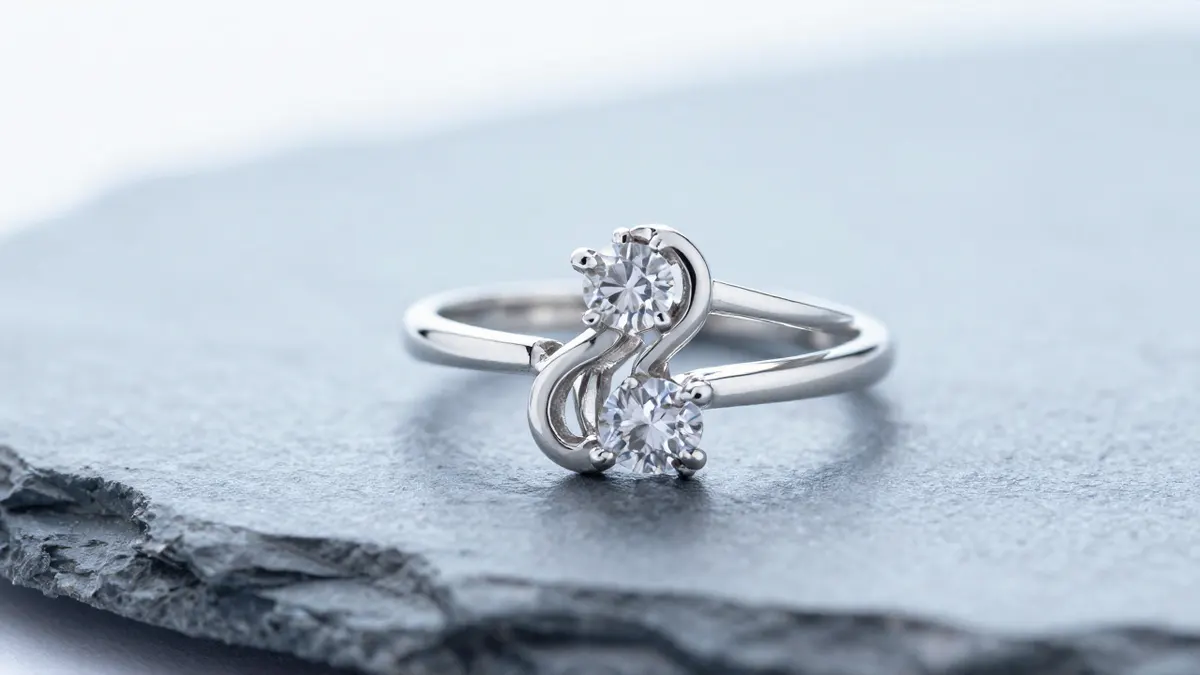
About this ring
- Metal: 925 sterling silver, meaning 92.5% pure silver alloyed with copper for strength
- Stones: two round CZ simulated diamonds, set in prongs
- Finish: polished, often rhodium plated to resist tarnish
- Sizes: US 5 to 10, with half sizes available on request
- Weight: about 2 to 3 grams, light enough to wear all day
The prong setting lets light enter from the sides and the top. That matters more than people think, because a stone set too deep looks dull no matter how well it is cut.
What are simulated diamonds made of?
Most simulated diamonds are cubic zirconia, a crystal of zirconium dioxide grown in a furnace at roughly 2,700 degrees Celsius. Some are moissanite or white sapphire, but CZ is by far the most common in silver jewelry. Colorless, clean and consistent, it was first sold in the 1970s and has barely changed since.
A simulated stone is a man-made material that imitates a natural gem. A lab-grown diamond is different: it is real diamond, only grown in a lab. Simulants are cheaper because they are chemically something else.
Simulated stone vs CZ: is there a difference?
Not much, in practice. "Simulated stone" is the broad term, and CZ is the usual material behind it. When a listing says simulated diamond, it nearly always means cubic zirconia.
Where it gets interesting is next to a real diamond. CZ is heavier, about 1.7 times the weight of a diamond of the same size. It is also softer, around 8 on the Mohs scale against 10 for diamond. And it throws more rainbow flashes, which a trained eye can spot in good light.
How to tell it from a real diamond
Fog the stone with your breath. A diamond clears almost instantly, while CZ stays misted for a couple of seconds. Honestly, though, a jeweler's tester is the only sure way. Most shoppers never need to check, because they know what they bought.
Wearing and caring for simulated diamonds
CZ scratches slowly, but it does scratch. Over two or three years of daily wear, the facets can turn slightly hazy. Take the ring off for the gym, dishes and gardening, and it will look good for far longer.
Clean it every couple of weeks in warm water with a drop of mild soap. Use a soft toothbrush behind the stones, where oils collect, then dry with a lint-free cloth. Skip ultrasonic cleaners if the prongs look loose. Store the ring in a pouch, apart from other pieces, so the silver does not rub against harder stones.
If the silver darkens, a polishing cloth brings it back in under a minute.
Other styles to consider
If you like the look but want a single focal point, a simulated diamond ring with one center stone is the simplest step. For something with more drama, a solitaire with baguettes adds rectangular side stones that make the center look wider. Colour lovers often move on to a rainbow eternity ring, and gifting for a first commitment is easy with a sterling silver promise ring.
Frequently Asked Questions
What are simulated diamonds?
They are man-made gemstones, usually cubic zirconia, designed to look like diamonds. They contain no carbon crystal structure of a real diamond. They cost far less and come in near perfect clarity.
What is a simulated stone?
A simulated stone is any material that imitates a natural gem in appearance. It can be glass, CZ, moissanite or synthetic spinel. Its chemistry and hardness differ from the gem it copies.
Will a simulated diamond turn cloudy?
Not on its own. Cloudiness comes from soap film, lotion and light scratches. A gentle wash every two weeks keeps it clear for years.
Is 925 sterling silver safe for sensitive skin?
Mostly yes. The copper in the alloy can bother a small number of people. A rhodium plated finish reduces that risk.