Lab Created Diamond Solitaire Necklace in Sterling Silver
A simulated diamond necklace is the easiest way to get the look of a classic solitaire without paying for a mined stone. This one pairs a single round, brilliant-cut stone with a sterling silver chain, and it sits right at the collarbone where a solitaire looks best. It is light, it goes with almost everything, and it costs a small fraction of a real diamond pendant.
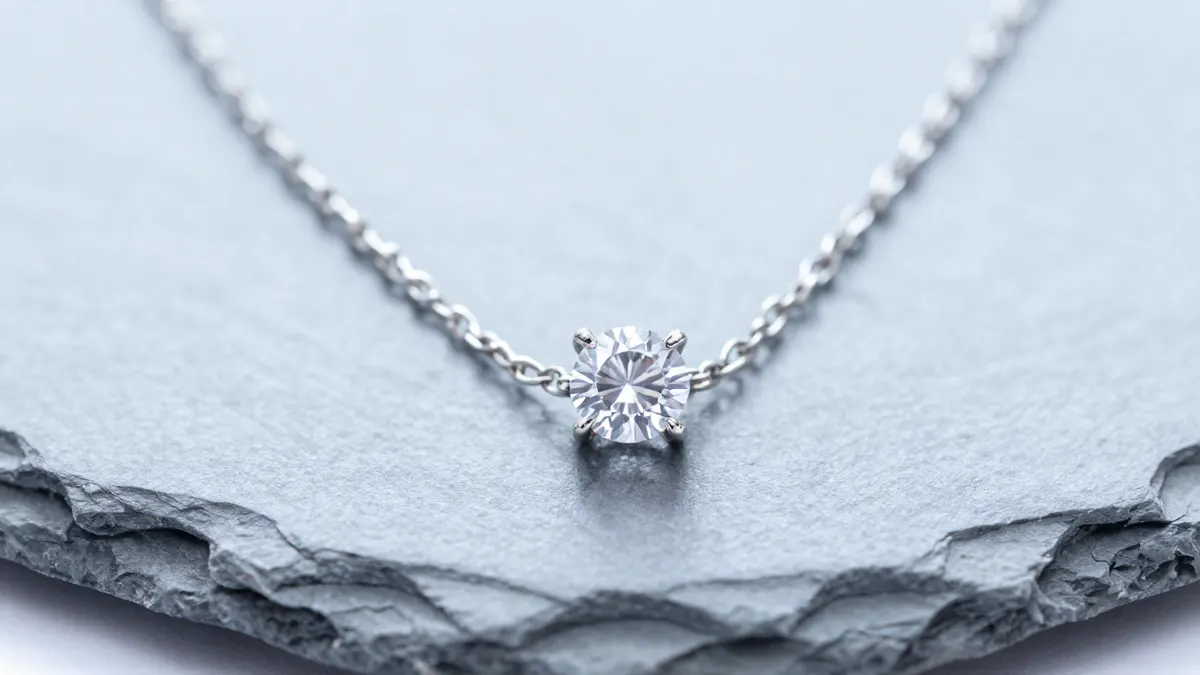
What the necklace looks like
The center stone is a round brilliant of about 6 mm, which reads as roughly a one-carat diamond from across a table. It is held in a four-prong basket setting, a design that lets light enter from the sides and the bottom so the stone keeps its fire.
The chain is a fine cable style, usually 16 to 18 inches, with a spring-ring clasp and a short extender of about 2 inches. At 16 inches the pendant rests just below the base of the neck. At 18 inches it drops a little onto the collarbone, which most people find more flattering on a crew neck or a shirt collar.
Simulated diamond vs. real diamond
A simulated stone copies the appearance of a diamond but is made from a different material, most often cubic zirconia. Under a jeweler's loupe the difference shows, and a real diamond conducts heat in a way that testers can detect. In daily wear, though, almost nobody will notice.
The gap in price is the real argument. A natural one-carat diamond pendant in white gold often starts above 3,000 dollars. A simulated diamond necklace in sterling silver is usually found from around 30 to 80 dollars, depending on stone size and chain weight.
There is one trade-off worth knowing. Cubic zirconia is softer than diamond, so the facets can pick up fine scratches and a light film over the years. Plan on cleaning it often and keeping it away from rough surfaces.
Sterling silver, and what that means for your skin
Sterling silver is 92.5 percent pure silver, mixed with a small amount of copper for strength. It is stamped 925, so look for that mark. Most people with sensitive skin tolerate it well, since it contains no nickel in normal alloys.
Silver darkens with time because it reacts to sulfur in the air, to perfume and to sweat. A rhodium finish slows this down and gives the white, mirror-like shine you see in white gold. If the finish wears thin after a year or two, a jeweler can replate it for a modest fee.
How to choose the right size
Stone size changes the whole mood of the piece. A 4 mm stone looks quiet and suits an everyday office look. A 6 mm stone is the classic choice and the one we would pick for most people. Go to 8 mm only if you want something that is clearly a statement.
- 16 inches: sits high, best for open or scoop necklines.
- 18 inches: the most versatile length, works with nearly every top.
- 20 inches: hangs lower, good over knitwear or a V-neck.
Other pendants to compare
If you like the idea but want more going on, the triple simulated diamond pendant stacks three stones in a line and gives a longer, more graceful drop. For a slightly different take on the single stone, the cz solitaire pendant uses a similar setting at a lower price point.
Something with more color and less strict symmetry may suit you better. A swarovski crystal necklace has a different kind of glitter, softer and more playful, and it is easier to wear with casual clothes. The ballerina pendant is the choice if you want a gift with a story rather than a plain stone.
Caring for your necklace
Take it off before swimming, showering and workouts. Chlorine and sweat are the two fastest ways to dull both the stone and the metal.
Once a week, wipe the pendant with a soft, dry cloth. Every month or so, soak it for 10 minutes in warm water with a drop of mild dish soap, brush the back of the stone gently with a soft toothbrush, rinse and pat dry. Never use toothpaste, which scratches silver.
Store it flat or hanging, in a small pouch with an anti-tarnish strip. Tangled fine chains are nearly impossible to undo without bending links, so do not toss it loose into a drawer.
Frequently Asked Questions
Will a simulated diamond necklace turn my skin green?
Sterling silver rarely does. Green marks usually come from cheap plated base metals with a lot of copper. If you notice a mark, it may be a reaction to lotion or sweat, and wiping the piece after wear helps.
Can I wear it every day?
Yes, and many people do. Expect the shine to need a quick clean each week, and remove it for sleep if you move a lot, since the fine chain can snag.
How long does the sparkle last?
With regular cleaning, the stone looks bright for several years. Cubic zirconia can cloud slightly over time with heavy daily wear, but a good soak usually brings most of the brilliance back.
Is it a good gift?
A solitaire is a safe and well-liked choice for birthdays, graduations and anniversaries. Choose 18 inches if you are unsure of her neckline, and keep the extender so the length can be adjusted.